
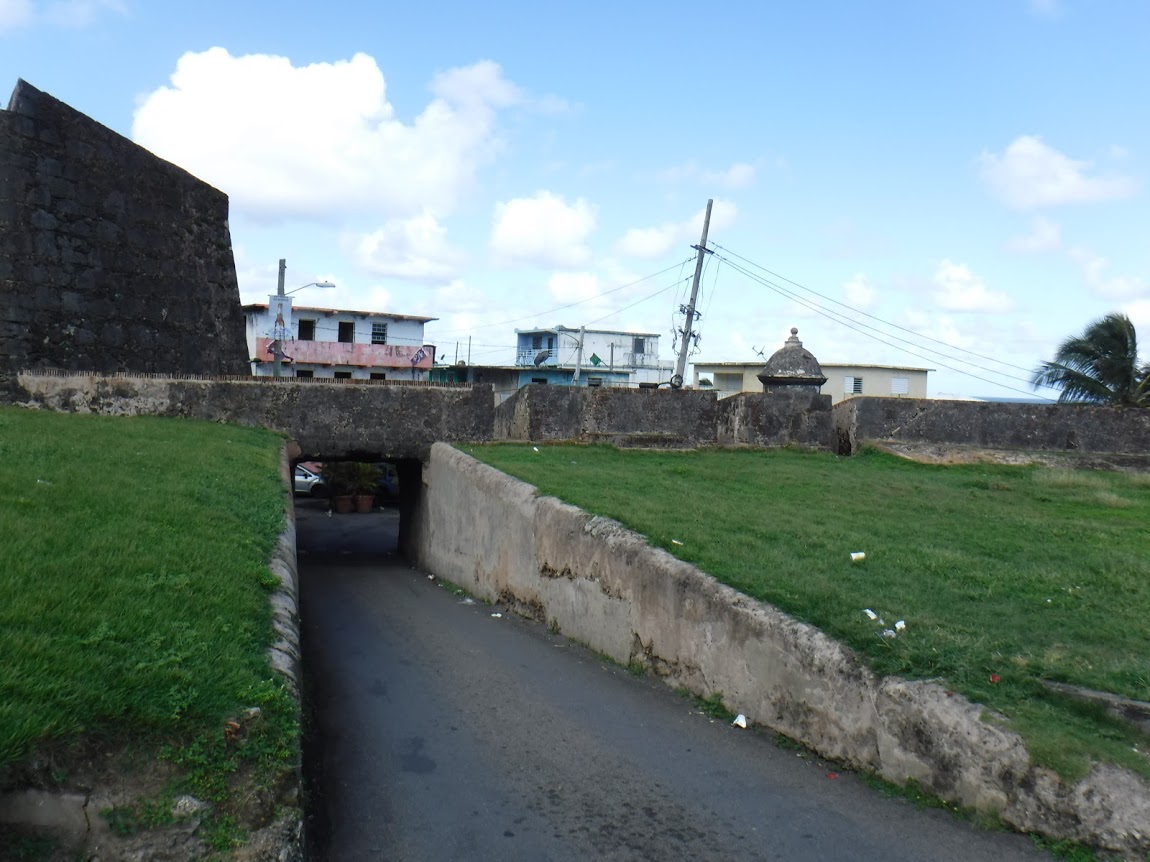
He picked us up and was immediately friendly in broken English. When we got in, he suddenly gained a distinctly serious face and asked “La Perla?” double-checking the stop I had requested on my Uber app. “Si, La Perla. Conoce Perla Bowl?” I excitedly replied. “El proyecto del artista Chemi Rosado-Seijo?” He looked at me like I was speaking Japanese or some shitty kind of Spanish, which I was. Shaking his head, we continued in broken English getting to know each other, talking about the island, places he liked and good restaurants he could suggest. Finally, we stopped on the main street at the bottom of a short hill before it started up towards a pack of tourists heading on the sidewalk up to the famous Castillo San Felipe del Morro. Looking to the right, the road branched downhill and through a short tunnel. “La Perla,” he said nodding in the direction of the tunnel. “I no go.” I just kind of stared at him for a second while he stared back. “Why not?” I asked, looking at the tunnel. I had put the Bowl into the app destination. We were not even close. “La policia no go.” I double-checked what I was hearing, “no police?” Shaking his head slowly and still staring he kind of whispered “No, la policia no va.” I looked at him, down the hill, through the tunnel and back at him. He was still staring. I opened the door and got out. The first thing I noticed was a tottering power line pole and the distinctly don’t give a shit paint jobs that were a high contrast to the area that I was leaving. Maybe nobody from the government came down here? I started to get nervous and felt a definite foreboding as I crossed under the tunnel and into The Pearl.
La Perla bowl is an internationally famous skateboard park that converts into a swimming pool on the weekends for residents of its notorious neighborhood. Even the official tourism website http://www.sanjuanpuertorico.com offers this subtle warning “residents of La Perla have a very strong code, they strongly respect tourists, and there has not been any history of visitors being harmed. Yes, the history of crime is high and typically related to drugs, but that is also true for a few other neighborhoods in the city.” Really makes you want to head down there for a mojito, right? The Barrio La Perla is located in arguably one of the island’s most desirable areas, oceanfront beneath Old San Juan and next to Castillo San Felipe del Morro, where every cruise ship and tourist to the island comes to visit. Developers and the government are eager to build new projects in La Perla, but the locals are fiercely proud of their history, rightfully so.
The Spaniards who built the fort to protect San Juan harbor used slaves and, when work was done, had them head down the hill and outside the walls of protection to the ocean’s edge. On the north side of La Perla is a cemetary and the area became a slaughterhouse and the workers soon built houses in this area of San Juan that is most exposed to wind, waves and often the strongest of hurricanes. These families have a long history of being badass tough and self-reliant.
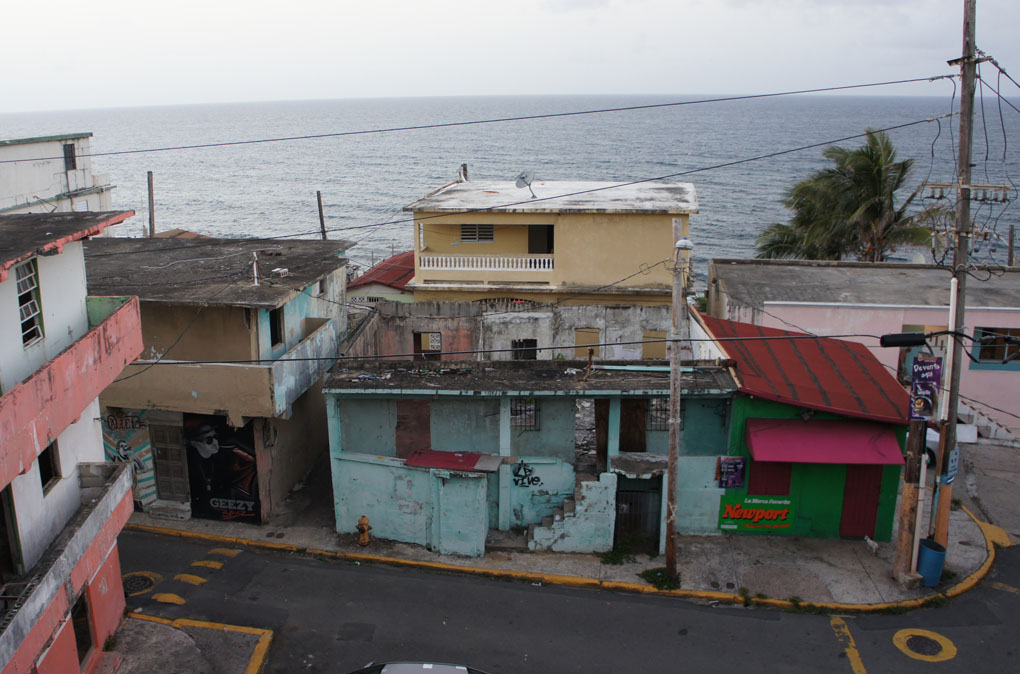
Once inside the tunnel, a woman was in the street sweeping the sidewalk in front of her home store where she advertised Newport cigarettes on the outside and had a small window where you could also get sodas, some canned food and multiple days old looking bread. “La Perla Bowl, “I asked her and she stopped to take the top hand off of her broom and point downhill and quickly resumed her back and forth work on the dusty street. Nodding and heading down we passed two old men leaning on an old beater car, lovingly holding roosters and arguing about something. They stopped their argument only long enough to stare in unison at the wave I gave them along with a smile. I could hear their voices fade and the ocean faintly beginning to lap onto the rocky shoreline and turned a corner to see the Atlantic.
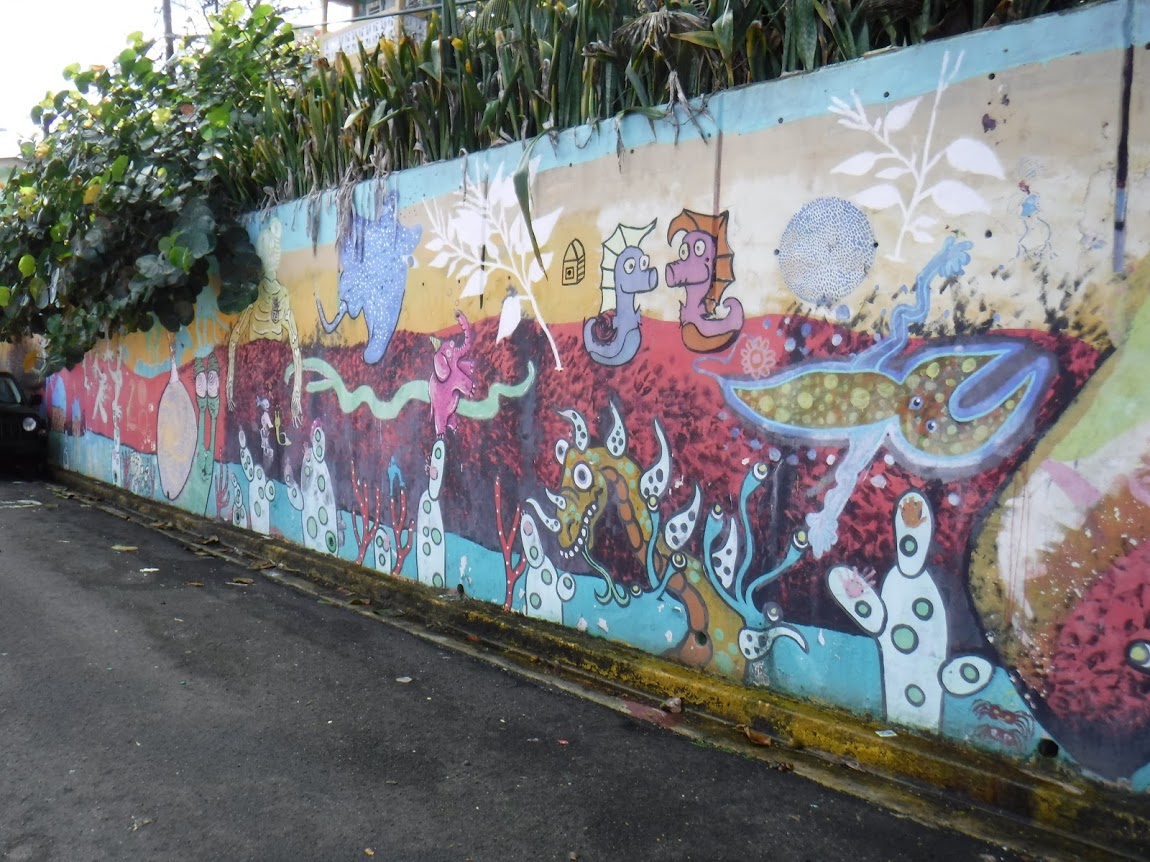
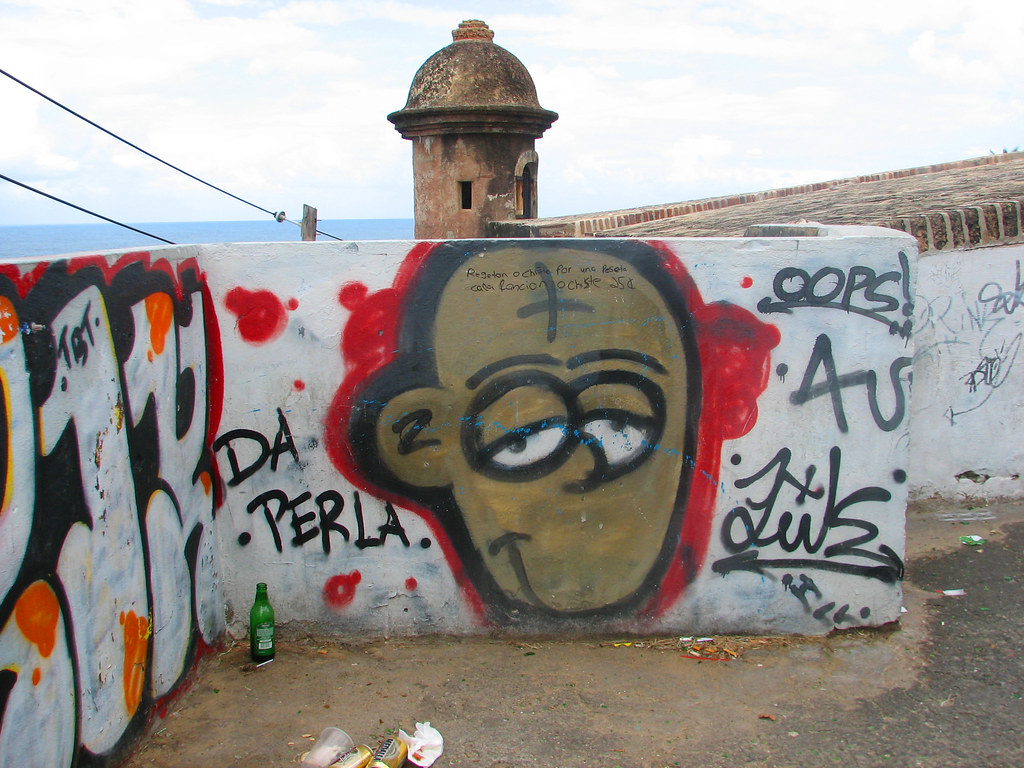
Suddenly art filled every wall including along the dilapidated houses crowded upon each other, dark windows causing me to feel like I was being watched by somebody. Many of the houses were crumbling and broken from the never-ending pounding of the storms and the residents not willing to fix them anymore. The art was obviously done by different artists, but each featured the drug-induced look of eyes that see things others do not. Wide whites and the pupils of all of them dilated, like a place Timothy Leery designed for his famous LSD experiments. The entire area was filled with tripping monsters, fish, coral, plants and Yemaya, Mother Ocean. Unique in the world, the La Perla wall art tells a story of drugs and a world that does them. Is this a message? Are we not supposed to be here? Walking past cars that had been stolen, brought here and de-parted, I started to worry and could start to see the Uber driver’s face, slowly shaking side to side. “No, la policia no va.” We chose to come in the morning, but it was distinctly unsettling and thought-provoking.
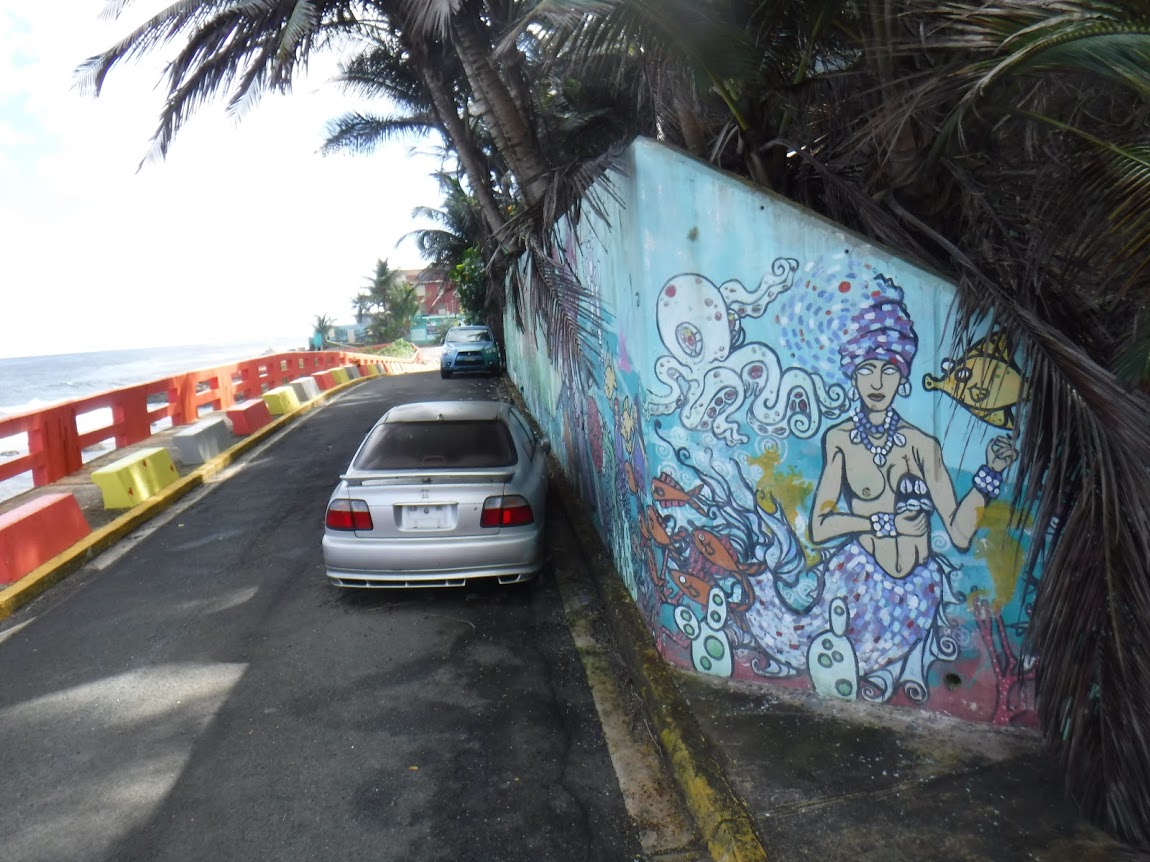
The reason why I had wanted to visit the Bowl was that it was built as an art project by Chemi Rosado Seijo, in my opinion, one of Puerto Rico’s most important art masters and one of my favorite artists anywhere. Chemi uses art as a positive social activism. His art projects are community-based which requires communication between himself, the community at large, with individuals who live in the community. Most importantly because of the necessity of everyone having to work together on the art project, people who live near each other, sometimes who have never spoken or had conflicts, become true neighbors. Chemi chooses the most beat barrios of his native San Juan and his art brings a purpose and pride to the communities that often has not been there for years. Because of the publicity, often these small neighborhoods get international media attention. La Perla has been the setting for movies, commercials and, most famously, as the background for the music video for the song Despacito, viewed over six billion times on YouTube. He doesn’t seek to make the neighborhoods more beautiful, but get people to realize how beautiful these places already are.
This “interweaving” of the communities that has inspired my work, intends to pay tribute to the people and the location where they have formed their communities.
Chemi Rosado-Seijo
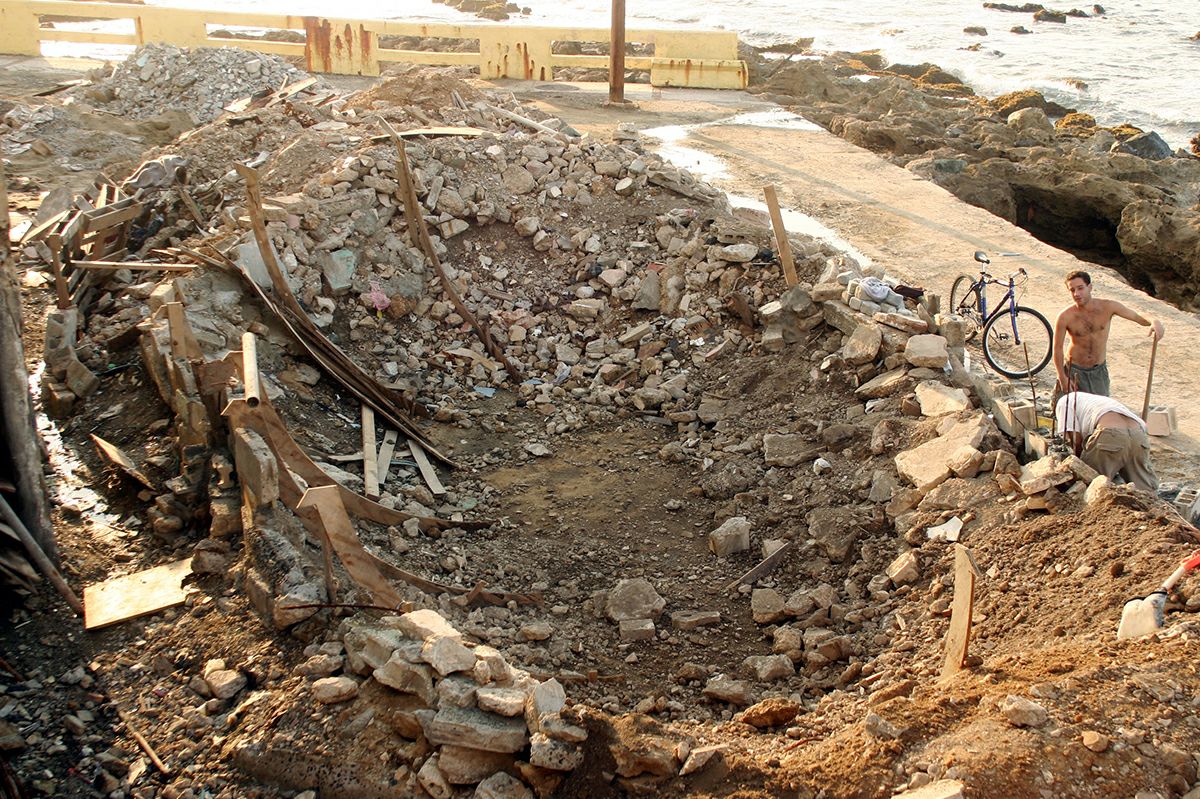
Chemi started La Perla’s Bowl as a sculpture, built with the locals, that functions as both a skateboarding ramp and an actual pool. To build the bowl, Chemi used found materials in the community as well as the cement that was donated. The main idea was to have fun and keep the sculpture looking hand made. Inspired by the first skateboarders in California, the Dogtown Boyz who took skateboarding vertical in abandoned swimming pools, Chemi decided to make a dual-purpose sculpture as both a skateboard park and as a swimming pool. It gets routinely repainted by whoever feels like adding new work to the sculpture.
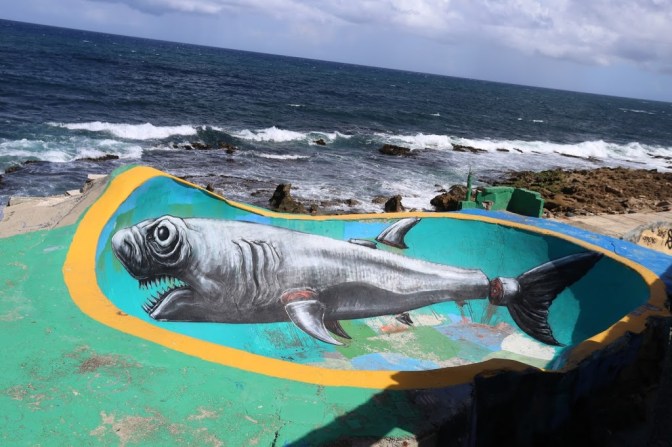
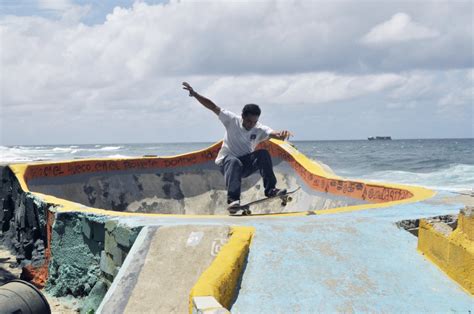
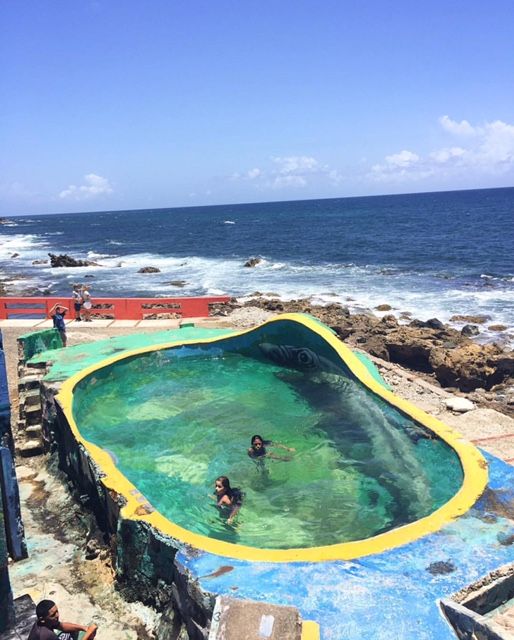
Finally, at the end of the street, we walked around deserted buildings along a rocky shoreline strewn with drift debris and concrete block chunks that had eroded from the nearby buildings. And suddenly the bowl was set there, just this crazy idea. I was overwhelmed with curiosity and climbed all over it as well as the walls of the buildings around it. I went exploring inside the abandoned, roofless buildings where tripped out art continued along every interior wall. I became overwhelmed with a desire to participate and skate in it. I ran through it like a kid and sat on all the walls, staring and surrounded by art everywhere. The whole scene became surreal and I suddenly understood the art of La Perla. Overwhelmed and supremely at awe by the beauty of a place reputed to be repulsively dangerous.
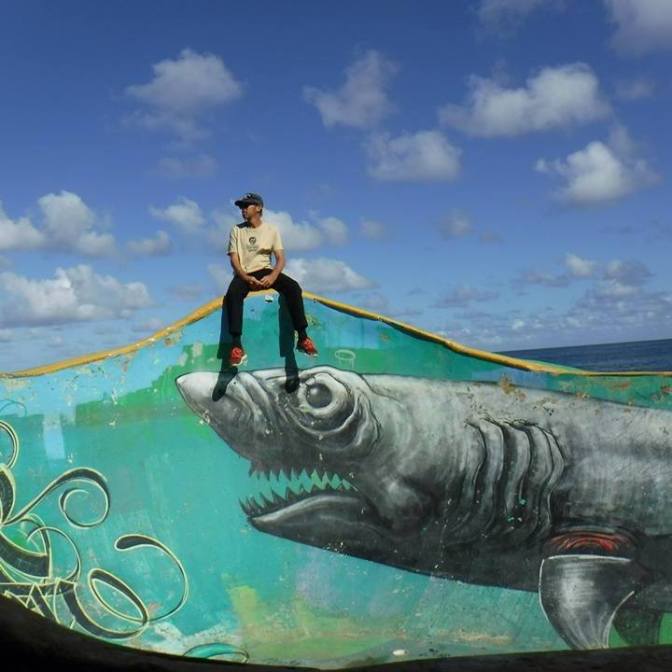
Photo credits – girls swimming by Ivaan Fernandez @ivaanfernandez.com
Building and skating the bowl by Chemi Rosado Siejo

 Sleep on Sand